
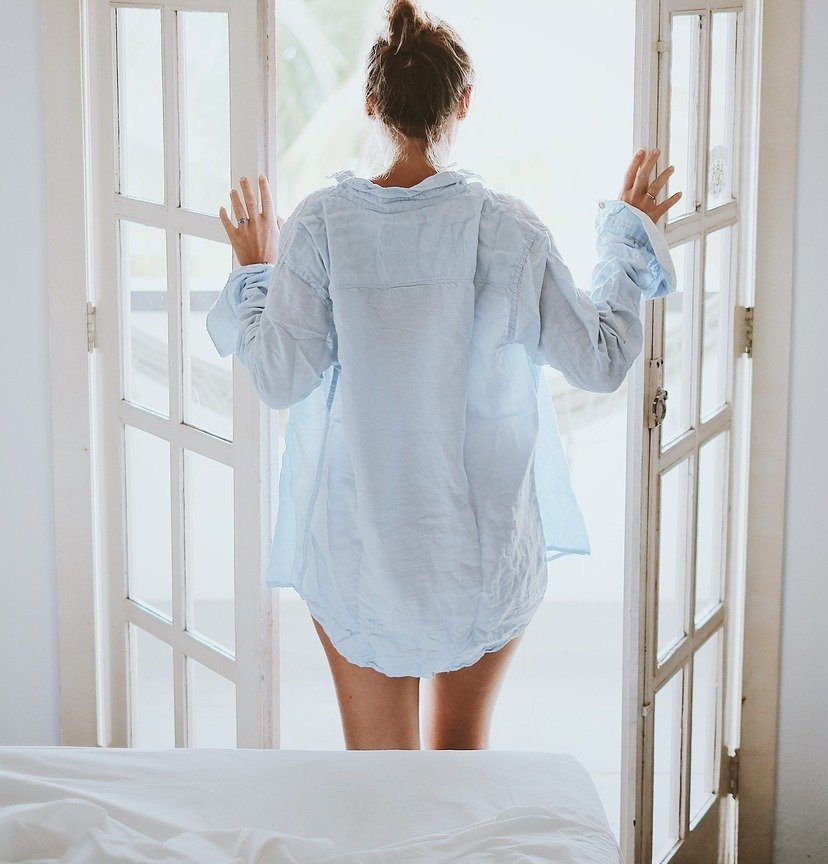
Whether they are psychologists, doctors, researchers, consultants or therapists, sleep experts agree on about ten ways to facilitate both sleep and the quality of sleep.
1. A room dedicated exclusively to sleep and sexuality

- The room is a place to sleep and have sex: no TV or computer and no school or office work.
- The room must be silent, dark, inspiring and soothing. Cooler than hot: around 18°C. Feel free to sleep with the window open. If there is too much noise in the room, you can install a fan. Its background noise will mask the other noises. Have a low intensity bedside lamp.
- The bed must be comfortable according to your own criteria and provide good support.
2. Routine and regularity
- Wait until you feel sleepy before going to bed. If you are not tired, do a relaxing activity while waiting for sleep to win you over.
- Try to get up at about the same time each morning, even on days off. This helps to regularize the body clock and makes it easier to fall asleep at night. Feel free to expose yourself to the light in the morning.
3. Peace of mind before going to bed
- Set up a bedtime ritual. Before going to bed, you can read (something light), listen to music, meditate, visualize, write your journal, take a bath, etc. It is important that, as much as possible, you have the same routine night after night. Avoid bright light.
- Try to solve your problems or put them temporarily aside before going to bed. This is not the time to worry. Anxiety is one of the biggest causes of insomnia.
- Before you go to bed, this is no time to pay bills or play an intense video game. Enjoy an anti-stress buffer period of about 30 minutes.
4. Physical exercise

- Physical exercise, provided it is practiced regularly, makes it easier to fall asleep and makes sleep deeper. On the other hand, intense and unusual exercise can prevent you from falling asleep well. It is also important to avoid exercising two to three hours before bedtime, as this may interfere with sleep. The ideal time to get active is in the late afternoon or early evening.
- Having sex, on the other hand, is an exercise that can be practiced just before falling asleep…. Indeed, it stimulates the production of endorphins, hormones that promote relaxation and well-being.
5. Food and drink
- It is better not to go to bed hungry. A light snack can help you sleep, but don’t eat a hearty meal just before bedtime. Dinner should be finished two to three hours, if not more, before going to bed.
- Avoid drinking too much before going to bed so as not to be woken up by the urge to urinate.
6. Avoid caffeine and nicotine
- To sleep well, it is better to limit the consumption of nicotine, which is a stimulant, especially as you approach bedtime.
- The same applies to caffeine (coffee, tea, chocolate, energy drinks, colas). This is especially important in the evening, as caffeine remains in the body for an average of three to five hours. But some people feel the effects until 12 hours. In addition, even when caffeine does not prevent you from sleeping, it can still disrupt sleep cycles and reduce the amount of deep sleep.
7. Alcohol: a harmful sleeping pill

- Although alcohol can make it easier to fall asleep, it reduces the quality of sleep, partly because of the multiple (often unconscious) awakenings it causes. In addition, it disrupts sleep cycles and often exacerbates snoring and sleep apnea problems. This results in a less relaxing and regenerating night.
8. The naps
- Not all specialists agree on naps. Some people claim that they interfere with normal sleep. People who feel less tired at night would fall asleep less well. Others say that they can be considered as a beneficial complement to the night, a real invigorator, but only if you already sleep well.
- But most agree on the following points. People with insomnia should not take naps or they will have even more sleep problems. The ideal time to take a nap would be between 2:00 p. m. and 3:00 p. m. It is at this moment that we feel a certain drowsiness naturally generated by our biological clock. Finally, the nap should not last more than 30 minutes. One study concluded that the optimal duration of naps was 10 minutes (compared to 5, 20 and 30 minutes).
- These are the ones that would be most beneficial in increasing alertness, counteracting fatigue and improving vigour and cognitive performance. Their effects were felt until two and a half hours after waking up. Shorter naps had little effect. The longest ones caused some post-wake drowsiness and their beneficial effects were no more lasting than those of 10 minutes. You can set an alarm clock to 15 minutes (5 minutes of sleep and 10 minutes of sleep) to make sure you don’t get too much sleep.
- In the elderly, it seems that longer naps can be beneficial, especially since their more fragile sleep means that they often only manage to sleep for 6 hours and a half per night. Moreover, according to statistics, when day and night sleep hours are taken into account, the total sleep time of the elderly is comparable to that of other adults.
9. If you can’t fall asleep
- If you still don’t fall asleep after about 30 minutes, don’t be relentless: stress and anxiety are the enemies of sleep. Instead, leave the bed and do a relaxing activity under a dim light: read, knit, listen to soft music, etc. Go back to bed when you’re tired.
- If you wake up at night, avoid constantly looking at the time on the alarm clock. You can even turn it over before going to bed. Looking at the time again can increase stress. However, if you feel as if you have been awake for more than 30 minutes, get up and do the routine described above.
- If you have difficulty falling asleep or waking up at night more than three times a week for more than a month, or if you feel drowsy for no apparent reason, talk to a doctor. You may have sleep apnea or restless leg syndrome, for example.
10. Sleeping pills

- Sleeping pills can help on occasion, especially in the case of insomnia caused by acute and transient stress or jet lag, for example. But they should only be used as a last resort and always for a short period of time, a few weeks at most. They lose their effectiveness over time and the dose cannot be increased indefinitely.
- Moreover, the sleep they induce is not of the same quality as natural sleep. They can also cause long night awakenings that the sleeper will not remember. He will then mistakenly believe that he had a good night’s sleep.
- Sleeping pills can also cause side effects such as hangovers, drowsiness, anxiety, and decreased memory and concentration. Finally, when the use of sleeping pills stops, a rebound effect can occur, characterized by increased sleep difficulties and severe anxiety.
- Never mix alcohol and sleeping pills.
 Iron Health