Greetings to all ☺. My name is Roger and I created this blog to share with you the best tips and cures to stay at the top of health. Subscribe and just let me surprise you….
Here is the gateway to a new you incredibly well in his body and feeling healthy.
— Roger Dupont.
This is my first publication and I would like to sincerely thank you for your presence. My ultimate goal on this site is to share with you the best tips to end up with this or that disease, natural remedies, tested and approved diets, etc.. All this to give you access to the best of yourself, in top form and breathing the joy of life.
To embark on this incredible adventure with me, don’t forget to subscribe. Because I also share private and exclusive content with my subscribers.
If you take 20 people at random and ask them what is the cause of weight gain, I can already tell you that you will get 20 different answers. They will tell you that:
It’s because of the sugar
It’s because of your caloric intake
It’s because of the bread
It’s because of your physical activity
It’s because of your genetics
It’s because of the lack of sleep
And so on…
But in the end, who will be right?
Do you want to know?
Well, they’ll all be right… but halfway.
Despite what many people may think, there is not only one way to gain weight. A
I will explain in my next article on calories, weight gain is not due to a caloric imbalance, but rather to a hormonal disorder of fat accumulation.
On the other hand, all sources of weight gain have a common denominator: insulin!
Some people tell you that fat intake is not a mechanism regulated by your body, but it is totally wrong! All the systems in your body are regulated by what is called: a hormone.a hormone?
a) What’s a Hormone?
It is a molecule that is responsible for delivering a message to a target cell in order to regulate several mechanisms in your body (appetite, fat storage, blood sugar level, muscle and bone renewal, etc.)
For example:
Your size is regulated by growth hormone.
Your sexuality is regulated by testosterone and estrogen.
Your body temperature is controlled by the thyroid gland.
Your blood sugar level is controlled by insulin. Your fat intake is controlled by several hormones, the most famous of which is leptin!
The list is long as you can imagine 😊.
But then Roger, does that mean that the leptin is responsible? »
This is what we will now see at 😉.
b) What is the hormone responsible for your weight gain?
Since you have been told since time immemorial that you are gaining weight because you eat too much, you may be tempted to think that the hormones responsible are leptin, ghrelin (the hormone that regulates hunger) or even satiety hormones (YY peptide and cholecystokininin).
To know precisely, a causality test should have been carried out.
That is to say:
Find volunteers, inject them with each suspicious hormone one by one, do this study over several months, and see if they gain weight.
Oh, but wait a minute!
It has already been done 🙂 .
Result :
Fat intake, hunger or satiety hormones have not passed the causality test.
But
Two hormones passed the test successfully: insulin and cortisol.
We will focus on insulin in the first instance, because you will see in the rest of this article that the two are closely linked…
How can you be sure?
To be sure that this hormone is responsible, several studies have been carried out on the subject that confirm this theory.
A study was carried out over a period of 8 years by researchers from the San Antonio Heart Study, which confirmed that there was indeed a very strong correlation between high insulin levels and weight gain.
But this is not the only study that has been done in this regard.
In 1993, researchers from the Diabetes Control and Complications Trial conducted 6 years of studies to compare the effect of a standard dose of insulin with a high dose on healthy people.
If insulin is indeed a cause of weight gain, there should logically be a weight gain proportional to the dose of insulin injected.
Are you following me this far? 🙂
Result :
Participants who received the highest dose of insulin gained on average 4.5 kilograms more than participants who received the lowest dose.
I would like to specify one thing:
All participants were morphologically similar.
The only difference between the two groups was the dose administered.
To conclude:
The higher the insulin level, the more weight increases!
The end of the myth about calories
I know that there are still many people who swear by the calculation of calories to lose weight.
If this is still your case, it means that:
or you have not yet read my article on calories which I will post soon, I invite you to come back soon to read this article 😊.
or that you are suicidal, but wait before jumping out of the window, the rest should interest you 😊
I definitely want to bury this false belief of caloric imbalance to lose weight.
To do this, I would like to ask you a simple question:
In your opinion, what would happen if insulin were injected into a person who is in caloric restriction? W
it still gain weight or not?
To answer this question, researchers administered a high dose of insulin to a group of participants.
The doses were increased daily for 6 months, and as the doses increased, so did their caloric intake. Result : Patients gained an average of 8.7 kg, even with less food. Surprising, isn’t it? 😃 So forget everything you’re told about the causes of your weight gain! This is absolutely not due to a caloric intake that is too high, nor to a lifestyle that is too sedentary, but to an insulin level that is too high! If you were to retain a single sentence from this article, it would be this one. So you grafted it into your brain, or you framed it in your living room once and for all:). To summarize this part, keep in mind that:
REMEMBER
1. Weight gain is a hormonal problem.
2. The hormone responsible is insulin.
3. The higher your insulin level, the more your weight increases.
4. You control your insulin, you control your weight.
What is the purpose of insulin?
Insulin is a hormone, secreted by the pancreas, to reduce your blood sugar level.
We hear so many bad things about it that we forget that this hormone is there to protect you, and that without it, you couldn’t survive 😃
Insulin is a key regulator of energy metabolism. It is very important to understand what happens in your body when you eat so that you can identify the source of the problem.
As I told you earlier, a hormone is responsible for delivering a message to a target cell.
To convey this message, hormones will connect to receptors on the surface of cells (like a key and a door lock).
How does this translate into your body?
When you eat, your blood sugar level will increase. Automatically, your pancreas will be alerted and will secrete insulin, which will be responsible for reducing it. The secreted insulin, therefore, will send the message to the cells to take the excess sugar and store it in the liver, in the form of energy (glycogen) for later use.
But the litheer doesn’t have unlimited storage! Once filled, the glycogen will be transformed into fat and stored in the reserves (lipogenesis => fat intake)
But don’t worry about it!
Your body is very well regulated.
Several hours after the meal, your sugar and insulin levels will drop.
This means that you will have less glucose available for your muscles, your brain and the functioning of all your organs. The liver will therefore convert the glycogen back into glucose, to diffuse it throughout the body and provide energy.
Once there is no more glycogen available, your body will use the fat reserves to make glucose. The fat will therefore be burned to release energy!
Insulin is therefore a storage hormone!
In a normal situation, your body manages the influx of sugars into the blood quite well.
You eat, peak insulin, you store glycogen and fat. You don’t eat, lower insulin levels, and use your reserves to provide energy.
It’s that simple!
To summarize, keep in mind that:
Weight gain is a hormonal disorder of fat accumulation due to too high a level of insulin.
Your body will first use what is more easily accessible to it (i.e. glycogen).
Once the stocks are empty, he will fall back on what is the most difficult to access (i.e. fat).
This explains why it is difficult to lose fat if you fill your glycogen stock all the time.
In other words: if you spend your days eating, as many “experts” recommend.
Now that you know that you need to control your insulin secretion to control your weight, the right question to ask yourself is what causes you to have these insulin peaks.
That is what we will see now.
The 3 main causes of insulin peak
There are three main causes of high insulin levels, if we put aside the use of medications that can have an impact on your insulin, and your weight gain.
But well, if you follow me through this blog, you know that I’m not a big fan of taking medication, so I assume you don’t take it, right? 😉 .
The three factors of high insulin secretion are:
Your diet.
Your stress level.
Your insulin resistance.
We will see in detail these 3 factors through this guide, starting with the most obvious one: your diet.
Click here to read the article on your diet: Nutrition
No time read everything?
So I made you a summary of this complete guide with my final word to definitely lose weight.
Are you tired of all these stupid diets that supposedly promise you to lose 15 kg of fat in 2 weeks?
Are you tired of all these new miracle methods that appear every week and give you no results?
You want to stop being fooled and finally know the real solutions to lose weight permanently. You don’t understand why people do it, but you don’t.
You think you are out of luck and have inherited the wrong genetics, and unfortunately you have to deal with it.
If you’re in that situation, then you know what?
Forget everything you’ve been told about weight loss.
In this article, I will reveal everything…
You will know the real causes of your weight, you will know why you can’t do it, and finally I will reveal the real solutions to lose weight, while taking care of your health…
It’s still the database 😊 !
Why this guide?
I created this guide for 3 reasons:
1. So you stop wasting your time and money on stupid diets.
2. So that you stop believing in fast, easy and lasting weight loss.
3. So that you can understand how your body actually works.
I’m going to be honest with you….
I’m sorry to tell you this, but if you can’t lose weight today, it’s because you’re doing it wrong.
But I reassure you, it’s not your fault!
Every day, you are bludgeoned with advertising promoting miracle diets, revolutionary methods and magic pills.
All this for the best, to have no results and at worst, to ruin your health.
Thousands of dream sellers come in every day to sell you their bullshit by telling you what you want to hear, even going so far as to play on your naivety and despair.
Stop the bullshit, the masquerade is long enough!
Yes, there are diets that work, but we will not lie to each other…
They only work in the short term. Because these draconian methods of losing a lot of weight quickly often end very badly.
In addition, most of these diets neglect the health aspect, which is essential for weight loss.
For example, I might advise you to do chemotherapy.
Are you going to lose weight? Yes, I’m sure it will! Is it good for your health?
Now I’m less sure 🙂.
At the end of this guide, I promise you that weight loss will no longer hold any secrets for you.
Believe me, losing weight is much easier than you think, and for that, I reassure you, you don’t need to calculate your calories.
You can also lose weight if you really have the will, good practices, and know how your body works.
This guide is, in a way, the result of several years of training in the field of nutrition.
It is on this type of guide that I would have liked to have found, in my early days, when I was still looking for solutions to lose weight, take care of my health, and that I was lost in this food jungle.
I hope you will like it 😊…
ATTENTION
Before we begin, I have something to tell you.
This guide is not for everyone!
If you are looking for a new miracle method to lose 30 kilos in 3 days while eating chips and watching Fast and Furious, then I advise you to leave this page.
This article will not suit you, and I advise you to go to other sites where you will find people much more competent than me for promises straight out of a Disney movie.
Believe me, this is not what is missing on the internet, and if this is what you are looking for then you will quickly find your happiness.
But,
If you want to know the real causes of your weight, and have real concrete solutions, supported by scientific research and explained by a nutrition enthusiast, to lose weight naturally and permanently, then you are at the right place 🙂 .
I think this guide is by far one of the most comprehensive, if not the most comprehensive in the field of weight loss.
I prefer to warn you, in this guide, I would not talk to you about calories or genetics, which are not, in my opinion, the main causes of weight gain.
If you would like to know more, then I will write you full articles that will cover these topics.
I invite you to come back in a few moments to take a look at 😉.
That beingsaid, here’s all we’re going to see today:
SUMMARY
1. The person responsible for your weight gain
a) What is a hormone?
b) The hormone responsible for your weight
c) The end of the myth about calories
d) How does this hormone make you gain weight?
2. The food supply
a) The glycemic index vs glycemic load?
b) What is the right indicator for choosing foods?
c) Why do these foods make you gain weight?
3. The stress
a) Which hormone is responsible for stress?
b) What is the relationship between stress and weight gain?
c) What causes you stress?
4. Insulin resistance
a) The story of Oprah Winfrey
b) What is insulin resistance?
c) Why does it make you gain weight?
d) The cause of insulin resistance
5. The real solutions
a) What diet to lose weight?
b) How can you reduce your stress?
c) How to stop insulin resistance?
The final word
This article is very long so I have subdivided it into 5 articles that deal with each of the main titles mentioned in the summary. Touch each title to read the corresponding article. To read my final word to summarize all this, click here
Whether they are psychologists, doctors, researchers, consultants or therapists, sleep experts agree on about ten ways to facilitate both sleep and the quality of sleep.
1. A room dedicated exclusively to sleep and sexuality
The room is a place to sleep and have sex: no TV or computer and no school or office work.
The room must be silent, dark, inspiring and soothing. Cooler than hot: around 18°C. Feel free to sleep with the window open. If there is too much noise in the room, you can install a fan. Its background noise will mask the other noises. Have a low intensity bedside lamp.
The bed must be comfortable according to your own criteria and provide good support.
2. Routine and regularity
Wait until you feel sleepy before going to bed. If you are not tired, do a relaxing activity while waiting for sleep to win you over.
Try to get up at about the same time each morning, even on days off. This helps to regularize the body clock and makes it easier to fall asleep at night. Feel free to expose yourself to the light in the morning.
3. Peace of mind before going to bed
Set up a bedtime ritual. Before going to bed, you can read (something light), listen to music, meditate, visualize, write your journal, take a bath, etc. It is important that, as much as possible, you have the same routine night after night. Avoid bright light.
Try to solve your problems or put them temporarily aside before going to bed. This is not the time to worry. Anxiety is one of the biggest causes of insomnia.
Before you go to bed, this is no time to pay bills or play an intense video game. Enjoy an anti-stress buffer period of about 30 minutes.
4. Physical exercise
Physical exercise, provided it is practiced regularly, makes it easier to fall asleep and makes sleep deeper. On the other hand, intense and unusual exercise can prevent you from falling asleep well. It is also important to avoid exercising two to three hours before bedtime, as this may interfere with sleep. The ideal time to get active is in the late afternoon or early evening.
Having sex, on the other hand, is an exercise that can be practiced just before falling asleep…. Indeed, it stimulates the production of endorphins, hormones that promote relaxation and well-being.
5. Food and drink
It is better not to go to bed hungry. A light snack can help you sleep, but don’t eat a hearty meal just before bedtime. Dinner should be finished two to three hours, if not more, before going to bed.
Avoid drinking too much before going to bed so as not to be woken up by the urge to urinate.
6. Avoid caffeine and nicotine
To sleep well, it is better to limit the consumption of nicotine, which is a stimulant, especially as you approach bedtime.
The same applies to caffeine (coffee, tea, chocolate, energy drinks, colas). This is especially important in the evening, as caffeine remains in the body for an average of three to five hours. But some people feel the effects until 12 hours. In addition, even when caffeine does not prevent you from sleeping, it can still disrupt sleep cycles and reduce the amount of deep sleep.
7. Alcohol: a harmful sleeping pill
Although alcohol can make it easier to fall asleep, it reduces the quality of sleep, partly because of the multiple (often unconscious) awakenings it causes. In addition, it disrupts sleep cycles and often exacerbates snoring and sleep apnea problems. This results in a less relaxing and regenerating night.
8. The naps
Not all specialists agree on naps. Some people claim that they interfere with normal sleep. People who feel less tired at night would fall asleep less well. Others say that they can be considered as a beneficial complement to the night, a real invigorator, but only if you already sleep well.
But most agree on the following points. People with insomnia should not take naps or they will have even more sleep problems. The ideal time to take a nap would be between 2:00 p. m. and 3:00 p. m. It is at this moment that we feel a certain drowsiness naturally generated by our biological clock. Finally, the nap should not last more than 30 minutes. One study concluded that the optimal duration of naps was 10 minutes (compared to 5, 20 and 30 minutes).
These are the ones that would be most beneficial in increasing alertness, counteracting fatigue and improving vigour and cognitive performance. Their effects were felt until two and a half hours after waking up. Shorter naps had little effect. The longest ones caused some post-wake drowsiness and their beneficial effects were no more lasting than those of 10 minutes. You can set an alarm clock to 15 minutes (5 minutes of sleep and 10 minutes of sleep) to make sure you don’t get too much sleep.
In the elderly, it seems that longer naps can be beneficial, especially since their more fragile sleep means that they often only manage to sleep for 6 hours and a half per night. Moreover, according to statistics, when day and night sleep hours are taken into account, the total sleep time of the elderly is comparable to that of other adults.
9. If you can’t fall asleep
If you still don’t fall asleep after about 30 minutes, don’t be relentless: stress and anxiety are the enemies of sleep. Instead, leave the bed and do a relaxing activity under a dim light: read, knit, listen to soft music, etc. Go back to bed when you’re tired.
If you wake up at night, avoid constantly looking at the time on the alarm clock. You can even turn it over before going to bed. Looking at the time again can increase stress. However, if you feel as if you have been awake for more than 30 minutes, get up and do the routine described above.
If you have difficulty falling asleep or waking up at night more than three times a week for more than a month, or if you feel drowsy for no apparent reason, talk to a doctor. You may have sleep apnea or restless leg syndrome, for example.
10. Sleeping pills
Sleeping pills can help on occasion, especially in the case of insomnia caused by acute and transient stress or jet lag, for example. But they should only be used as a last resort and always for a short period of time, a few weeks at most. They lose their effectiveness over time and the dose cannot be increased indefinitely.
Moreover, the sleep they induce is not of the same quality as natural sleep. They can also cause long night awakenings that the sleeper will not remember. He will then mistakenly believe that he had a good night’s sleep.
Sleeping pills can also cause side effects such as hangovers, drowsiness, anxiety, and decreased memory and concentration. Finally, when the use of sleeping pills stops, a rebound effect can occur, characterized by increased sleep difficulties and severe anxiety.
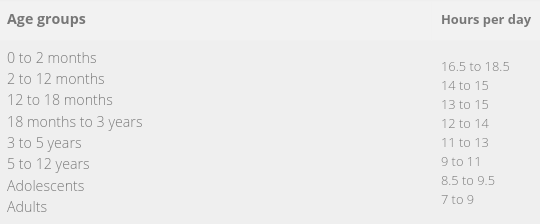
There is no specific standard for the ideal number of hours a person should sleep. It depends on the age, degree of activity and constitution of each person. Most adults need about eight hours of sleep. But some are satisfied with less than seven hours and remain fully functional. Others need a minimum of nine hours to function properly. However, according to sleep specialist Julie Carrier, people who sleep for only six hours and do not experience drowsiness symptoms during the day are extremely rare.
How do we know if we’ve slept enough?
According to specialists at the American Sleep Foundation, getting enough sleep simply means being able to function until the end of the next day, without feeling drowsy. Charles Morin, an expert on sleep problems, gives the following example in his book Winning the Enemies of Sleep: “Usually, a well-rested person will remain vigilant, even in an overheated room while listening to an uninteresting lecture after a hearty meal. “Another clue: if, in the morning, you tend to press the alarm reminder button on your alarm clock (snooze), you probably haven’t slept enough. Another way to know your natural sleep needs is to calculate your average length of sleep during the second week of your annual vacation. For most people, this would be more than the usual duration….
Average sleep needs: passeportsante.net
Can we sleep too much?
According to Julie Carrier, no study has shown that sleeping regularly for long nights could have any negative consequences. However, for several years, statistics have shown that sleeping little (less than seven hours) or a lot (more than eight hours) would be associated with a reduction in life expectancy. However, recent studies suggest that it is not really the fact of sleeping for a long time that is at issue. Rather, they are other factors that seem to be shared by people who sleep for a long time, such as fragmented sleep, increased fatigue, immune weakness, depressive tendencies or the prevalence of certain diseases. A person who sleeps long hours should therefore not try to shorten his or her sleep hours, but simply take the best possible care of his or her health,” concludes Julie Carrier.
Early bird or night bird?
It now seems to be a given that the fact of having a tendency to be an early riser or a night owl would be embedded in the genes and linked to circadian rhythms. These rhythms are directly dependent on the internal biological clock. It is possible, but only to a certain extent, to adjust one’s biological clock according to life’s constraints, such as the arrival of a child or a new work schedule. Light therapy and melatonin, the sleep hormone, can be used (see Night work and jet lag: when sleep is disrupted). But it is rare that people who naturally tend to be active and alert in the morning become real night birds. And vice versa. It is also good to know that the biological clock tends to change during adolescence. It is therefore normal for adolescents to want to go to bed later and stay in bed longer in the morning. It would be a biological question, not just a whim or the desire to continue the celebration…. In this context, various groups, particularly in the United States, are requesting that classes start later in the morning in order to respect the normal circadian rhythm of adolescents.
Being and staying healthy is not as complicated as we think. If you want to feel better, lose weight and optimize your health without spending too much time on it, this Newsletter is for you…
1. Eat organic food
Even if unfortunately the term “organic” does not always guarantee the quality of a product due to the lack of controls, the probability of finding pesticide residues in organic products is 18 times lower according to the European Food Safety Authority (EFSA). Remember that toxic substances from food are stored in the cells of our abdominal belt, where they generate a permanent inflammatory state that is the bedrock of most fatal diseases. It is therefore better to prevent!
2. Just move!
The human body only wears out if it is not used. To improve your metabolism, your body shape, reduce your risk of disease and activate your brain function, lift weights every morning. Use your toilet to strengthen your balance by brushing your teeth on one foot.
3. Control your stress levels
Permanent stress is harmful to health, as it raises cortisol levels in particular. This has negative effects on our metabolism and increases the risk of disease, obesity and depression. Fortunately, there are several methods to reduce stress, starting with a good night’s sleep.
4. Sleep like a baby
A good restorative sleep is essential for health. Sleep disorders are associated with obesity and a large number of diseases. It should be noted that the sleep cycles are about 1 hour ½ and the recommended sleep time is 8 hours/night, or 5 cycles.
5. Avoid toxic substances
Of course, there is tobacco, which kills 50% of its loyal consumers, and alcohol, toxic beyond 2 standard glasses per day for a woman and 3 for a man. But above all, do not touch industrial food (ready meals) because there is a maximum risk. To convince yourself, read Christophe Brusset’s “You’re crazy to swallow that”. If possible, also remove added sugars and artificial sweeteners, as well as all sweetened drinks.
You have to stick to it for life.
It is important to keep in mind that a diet is a bad idea because it almost never works in the long term. For this reason, it is essential to aim for a change in lifestyle. Being healthy is a marathon, not a sprint. It takes time and must be maintained for life.











 Iron Health